This article is not going to be a descriptive article telling you about intrusive thoughts or treatment. Rather, it is intended to be a practical tool that you can use right away to help with intrusive thoughts. I am going to do a series of these type of practical pieces and shall start today for people with Paedophilia themed OCD (POCD) and show you how to work with the thoughts.
Learn more about POCD
- Start here: POCD Guide
- Next: POCD treatment options
- Therapy: ERP for POCD | CBT for POCD
- More reading: Browse all POCD articles
My intrusive thoughts – what if I’m a paedophile? Or insert your own intrusive thought.
First thing is to acknowledge and normalise the thought. Up until now you probably have been resisting it, but acknowledge it, let it sit. You can say the following script or write your own.
“Okay, I’m having the thought, ‘What if I’m a paedophile?’ This is an intrusive thought. It’s distressing, unwanted, and ego-dystonic (meaning it goes against my values). It does not mean I am a paedophile. It’s a mental glitch, not a reflection of my character.”
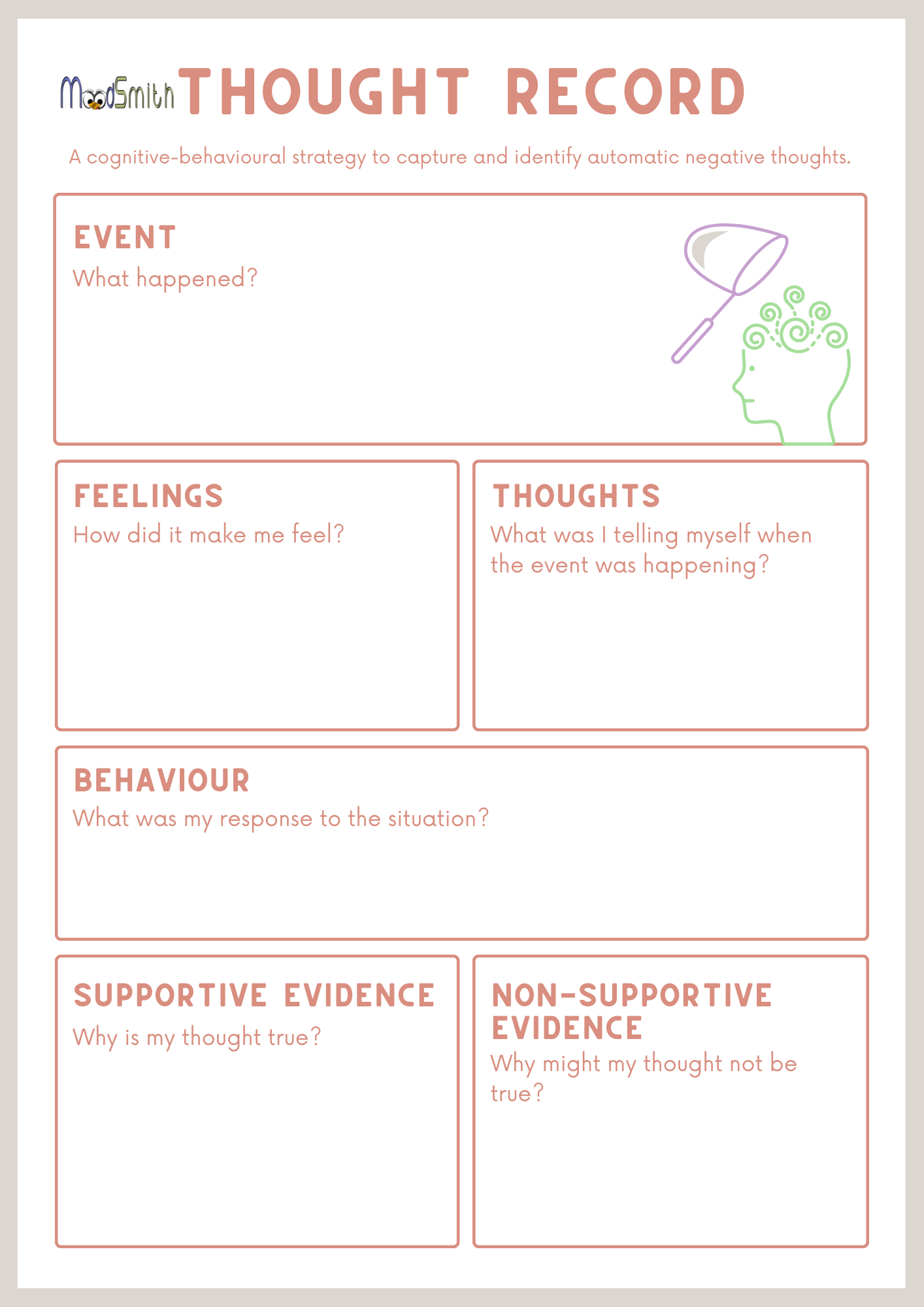
Cognitive Restructuring (Challenging the Thought):
This is part of cognitive behavioural therapy (CBT) which you can start to use immediately by following the instructions below or read more about how CBT helps with POCD here.
Most people just accept their thoughts without questioning the validity of them, in this exercise you are policing your thoughts, checking their accuracy and you can start by asking yourself,
‘What if I’m secretly attracted to children?'” What evidence do you have that would back up this thought, e.g. “Have I ever acted on any attraction towards children? Have I ever had any genuine desire to harm a child?” (The answer is overwhelmingly likely to be no).
“What is the actual probability of me suddenly becoming a paedophile? Is there any evidence to support this? Do I have any history of such behaviour or desires?” (Again, the probability is extremely low).
Reframe the thought “Having this thought doesn’t mean I’m a paedophile. It means I’m experiencing an intrusive thought. It’s a sign of my anxiety, not my hidden desires.”
Exposure and Response Prevention (ERP)
You can read more about ERP here, but for now, you can start by trying the following
- “I’m going to briefly imagine a scenario related to this fear, such as seeing children playing in a park. I will allow myself to feel the anxiety that comes with this image.”
- “Crucially, I will resist any urges to engage in safety behaviours. I won’t seek reassurance online, avoid places where children might be present, or mentally review my past actions to prove I’m ‘safe’.”
- “I’ll sit with the discomfort until it naturally subsides. This teaches my brain that the thought and the associated anxiety are not dangerous.”
Acceptance and Commitment Therapy (ACT) – Defusion:
- “I notice I’m having the thought, ‘What if I’m a paedophile?'” (Creating distance).
- “I can say this thought out loud repeatedly until it sounds silly and meaningless: ‘What if I’m a paedophile? What if I’m a paedophile? What if I’m a paedophile?'” (Weakening the thought’s grip).
- “I can imagine the thought written on a leaf floating down a stream, or as a cloud passing in the sky. I’m observing it, not engaging with it.”
Mindfulness:
- “I’m going to shift my attention to my breath. I’ll feel the air entering and leaving my nostrils. When the intrusive thought pulls me away, I’ll gently bring my focus back to my breath.”
- “I can also focus on my senses: what I can see, hear, touch, smell, and taste right now.”
6. RAIN Acronym:
- Recognize: “I recognize I’m having the thought ‘What if I’m a pedophile?'”
- Allow: “I’m willing to feel the discomfort associated with this thought.”
- Investigate “I’m going to re-engage with what I was doing before the thought arose. I’ll return to my current activity.”
- Non-identify: “It’s normal to have disturbing and unwanted thoughts. It doesn’t define me.”
7. Self-Compassion:
- “Having these thoughts is distressing, and it’s okay to feel anxious or upset. I’m going to treat myself with kindness and understanding, just as I would a friend who was struggling.”
Recap
These techniques take practice, you have to do them each time you have the intrusive thought. If your thoughts interfere with your life to the extent that working with your thoughts on your own are not helpful, then I recommend meeting with a psychologist or other mental health professional who is trained to work with OCD.